Key takeaways
- Around 82 young people applied for 30 free places; the school ran over eight teaching days between 3 and 13 August at UCL, with attendance of around 75%.
- Mornings covered English for university: UCAS applications, personal statements and student funding. Afternoons were hands-on science, from DNA extraction to oscilloscopes and coding in Google Colab.
- Every student finished by researching, designing and presenting a poster of their own, in English, at UCL.
- All 16 survey respondents enjoyed the school, felt welcome and would recommend it; 88% would like to study a STEM subject at university.
- Applications
- ~82Applications
- Free places
- 30Free places
- Teaching days
- 8Teaching days
- Attendance
- ~75%Attendance
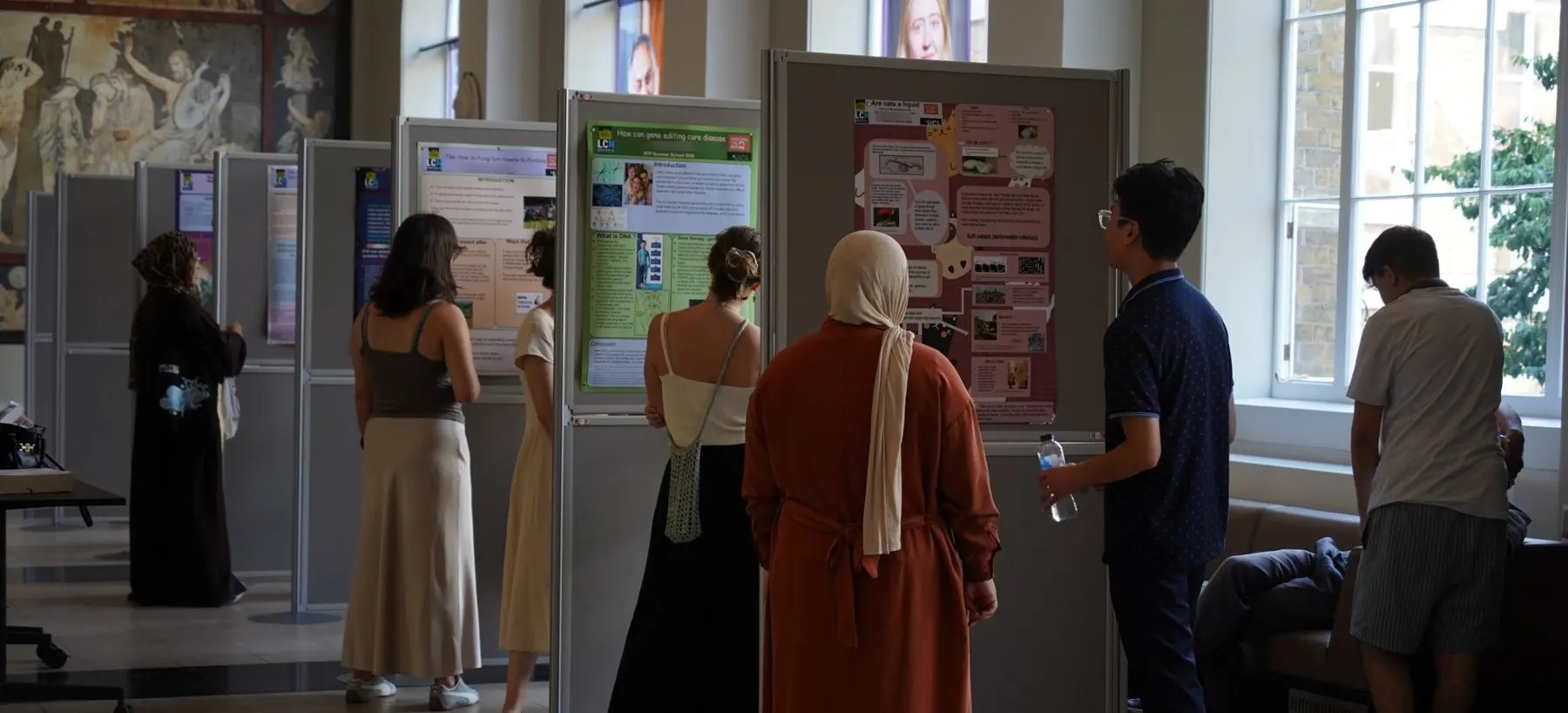
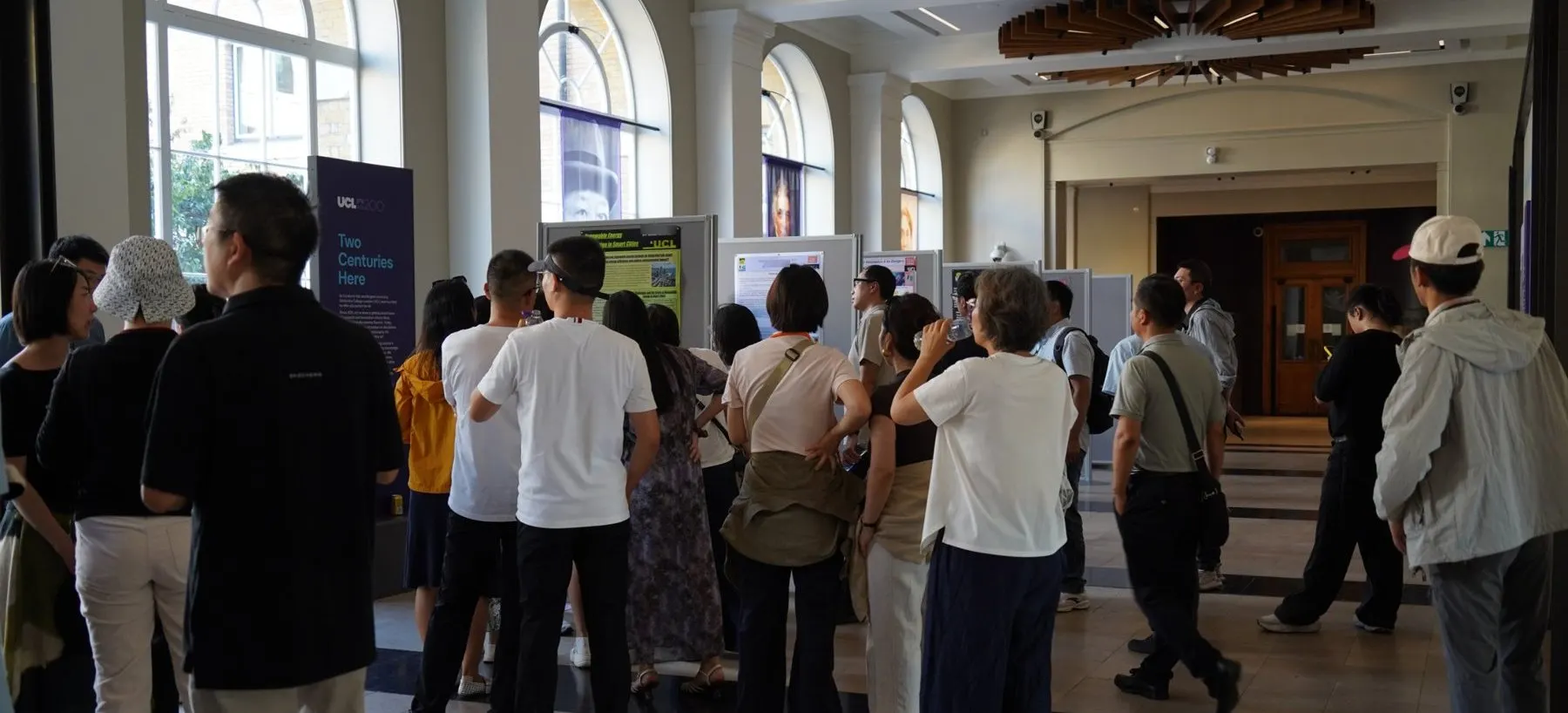
On the final afternoon of this year’s summer school, a row of poster boards at UCL asked some unexpected questions. How do fungi turn insects into zombies? Can gene editing cure disease? Are cats a liquid, and what could that teach engineers about building soft robots? How might renewable energy power the cities of the future?
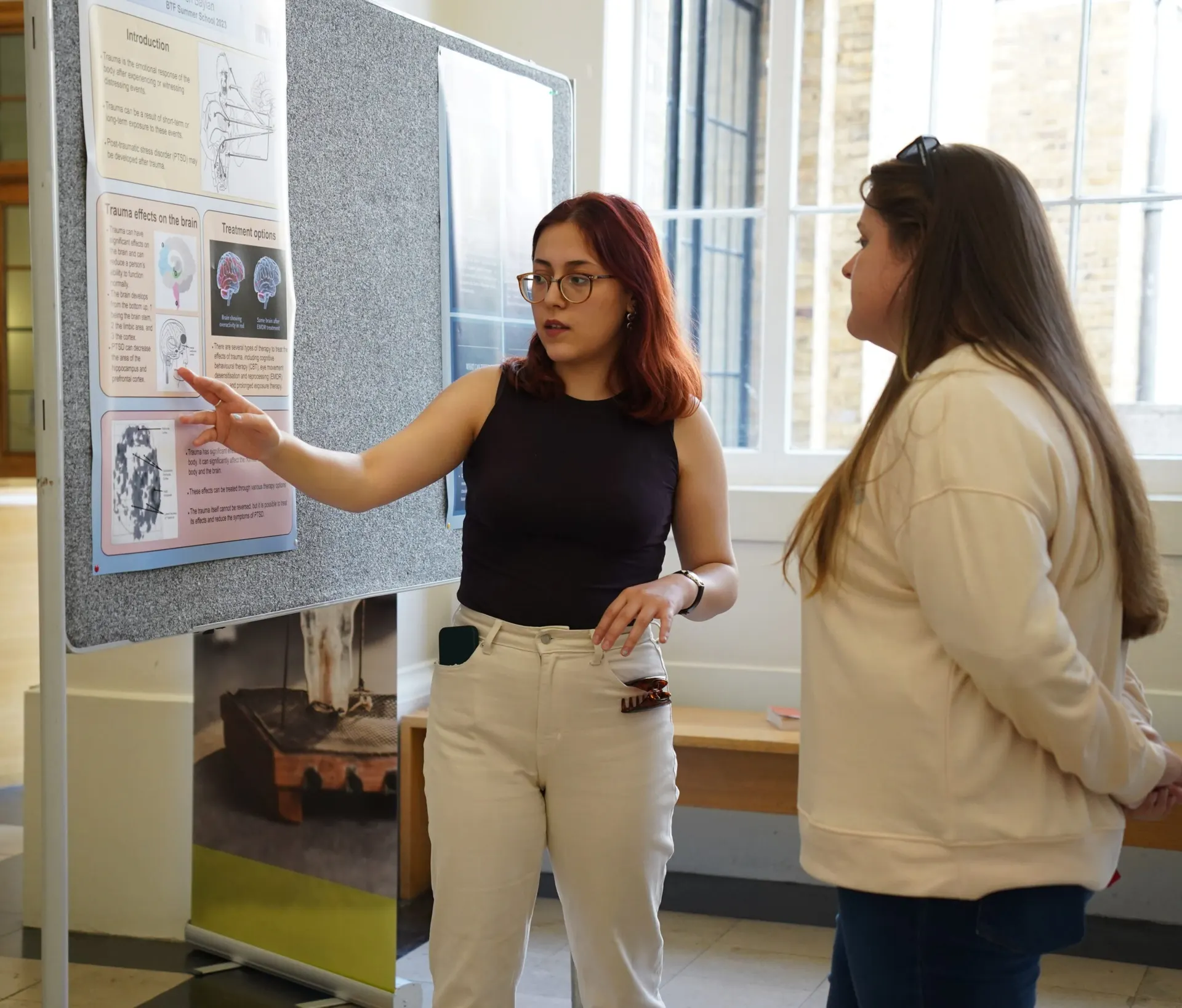
Every one of those posters was researched, designed and presented by a student at the Bridging the Future (BTF) Summer School 2026. Ten days earlier, the same students had arrived at UCL for introductions and an English assessment. By the end, they were standing beside their own work and explaining it, in English, to visitors at one of the world’s leading universities.
Why the summer school exists
BTF works with young people aged 16 to 22 from refugee, asylum-seeking and forced-migrant backgrounds. Many arrive in the UK with real ambition and ability, but few clear routes into higher education. In 2021, just 5% of refugees had access to higher education.
The summer school is one way BTF helps close that gap. It combines English, university preparation and hands-on science, and it is entirely free: travel, lunch and materials are all covered. This year, around 82 young people applied for 30 places. The school ran over eight teaching days between 3 and 13 August, and attendance across the programme was around 75%.
Learning the language of university
Mornings belonged to our English team: Anna, Emma, Bilal and Dima, supported by Alison. These were not English lessons in the traditional sense. Students worked through the real steps of getting into higher education: how to apply to university, how to write a personal statement, and how university study can be funded. Along the way, they practised the language they will need on a UCAS form, in an interview and in a lecture theatre.
“I liked how much I learned about the personal statements and the UCAS application.”
Student, BTF Summer School 2026
Science up close
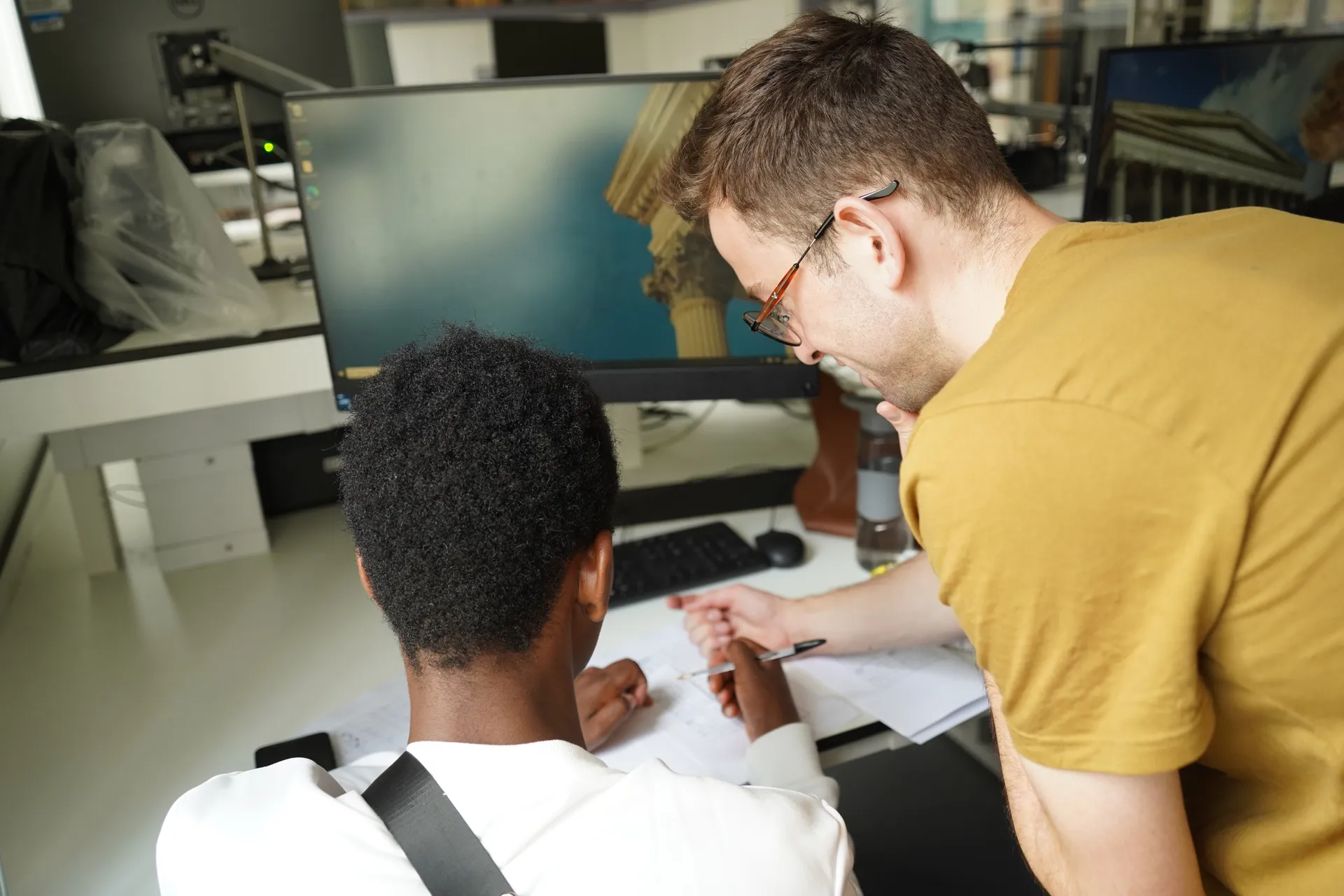
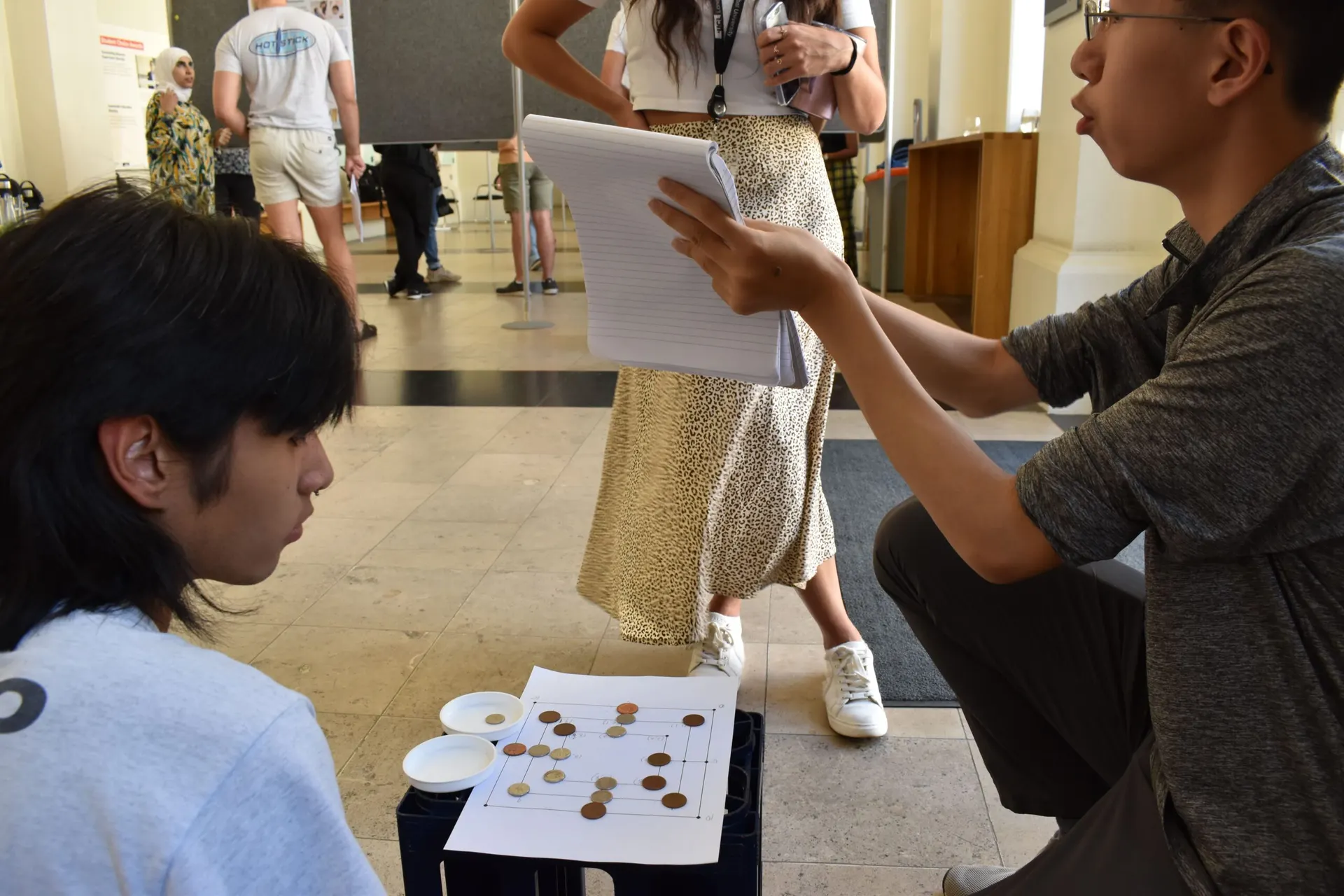
Afternoons moved out of the classroom and into the lab. The science programme opened with a classic: extracting DNA from fruit. In the days that followed, students tackled a mathematical workshop with Nikhita and toured the UCL campus. They also joined Sasha for a physics session, using oscilloscopes to see sound waves and calculate the speed of sound.
“I liked the physics workshop when we were using oscilloscopes to see how we can alter sound waves’ wavelength.”
Student, BTF Summer School 2026
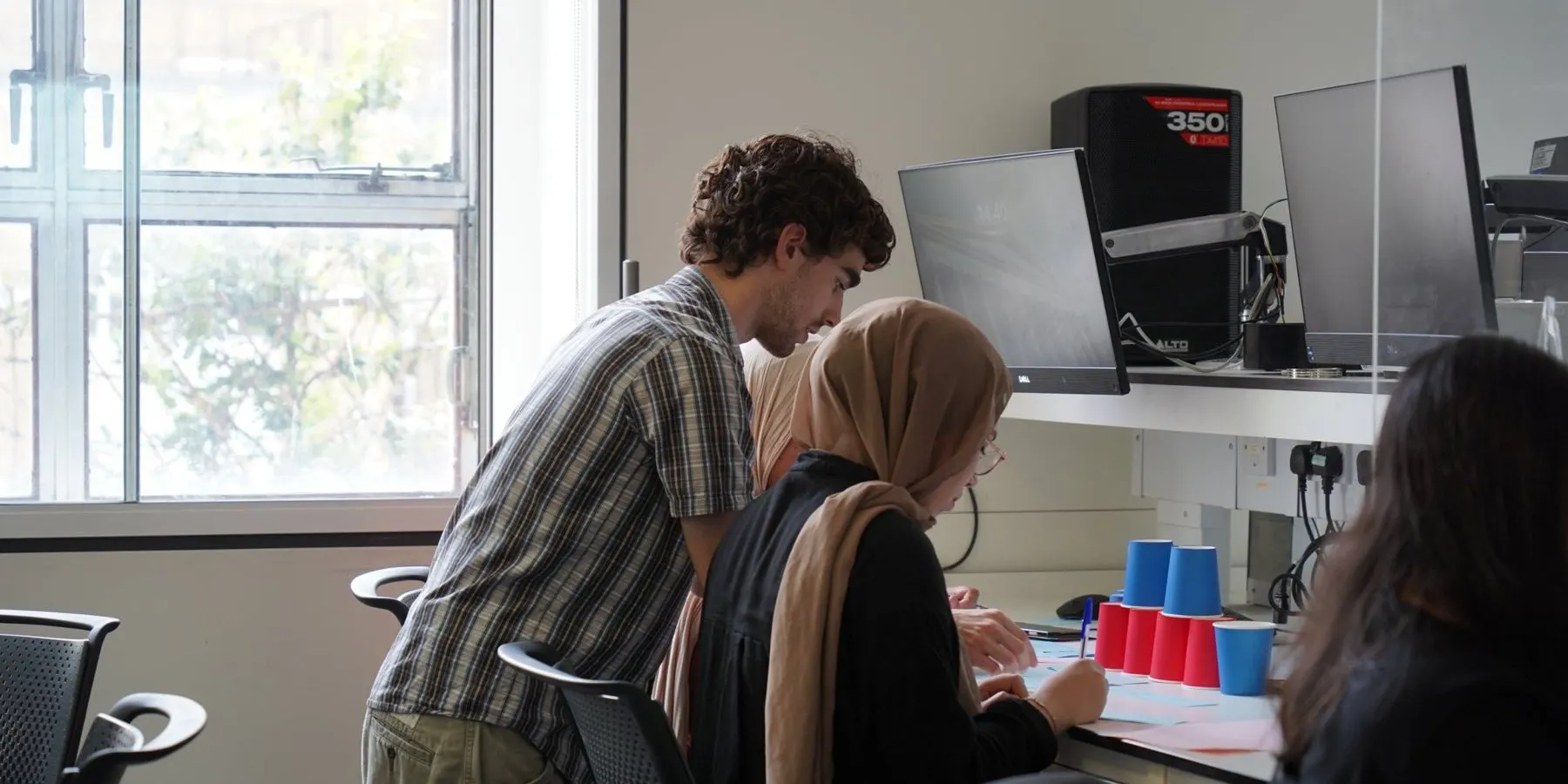
The second week went further. Robert Insall led a session on cell biology that also showed how machine learning is being used in biology and medicine, and several students named it as their favourite. Noor, a third-year astrophysics undergraduate, introduced organic solar cells and had students writing their own code in Google Colab. Maheen, a third-year physics student, joined by video call to explain how gravitational microlensing helps astronomers find objects across the universe.
For many students, the people mattered as much as the science. Talking informally with UCL undergraduates and researchers about what they study, and how they got there, made university feel real and within reach.
“I enjoyed making new friends, talking to people with different backgrounds and having discussions about science-related topics with mentors and peers.”
Student, BTF Summer School 2026
Ten days to a poster
The final two days brought everything together. Students spent 12 August building their posters with volunteers, testing their explanations and refining them in response to feedback. On the last morning they took part in a session with Legal Aliens. That afternoon, the posters went up and the students presented.
For many students, this was the moment the whole fortnight had been building towards: explaining a scientific idea, in English, to an audience at a university. In the feedback survey, 94% said they enjoyed the presentation lesson.
“Creating my own poster and presenting it really helped me gain more confidence and will definitely help me with presenting other projects in the future.”
Student, BTF Summer School 2026
What students told us
Sixteen students completed the end-of-school feedback survey. Every one of them said they enjoyed the summer school, felt welcome and would recommend it to a friend. Fifteen of the 16 gave the highest possible score for recommending it.
How students rated the summer school
Share of students who agreed or strongly agreed with each statement
- I'd recommend it to a friend100%
- I felt welcome100%
- I enjoyed the summer school100%
- I enjoyed the presentation lesson94%
- I'd like to apply to UCL88%
- I'd like to study a STEM subject88%
- I learnt a lot88%
- I'm more interested in science81%
Show the data as a table
| Category | Agree or strongly agree |
|---|---|
| I'd recommend it to a friend | 100% |
| I felt welcome | 100% |
| I enjoyed the summer school | 100% |
| I enjoyed the presentation lesson | 94% |
| I'd like to apply to UCL | 88% |
| I'd like to study a STEM subject | 88% |
| I learnt a lot | 88% |
| I'm more interested in science | 81% |
The results go beyond enjoyment. Most students (88%) agreed they had learnt a lot, and 81% said they were now more interested in science-related subjects. Asked about their favourite afternoon workshop, students most often named a biology session, from DNA extraction to machine learning in medicine, followed closely by physics. Looking ahead, 88% said they would like to study a STEM subject at university, and the same proportion would like to apply to UCL. Half of the respondents plan to apply to university next year, for courses including medicine, dentistry, engineering, maths and computer science.
When asked what they liked most, students kept coming back to the people: friendly teachers and volunteers, new friends, and the chance to hear university students talk about their lives and passions.
“Everyone is super friendly and passionate.”
Student, BTF Summer School 2026
Students also gave us clear ideas for next year. They asked for more practical experiments, longer workshops, more biology, chemistry and maths, and a chance to work in a wider variety of labs and lecture rooms around UCL. We will be building these into our plans for 2027.
Thank you
BTF is run entirely by volunteers, and the summer school would not happen without them. Alongside the English team, the operations team was led by Beyza and Nada, supported by Safiye, Ceren, Helena and Alison, and kept every day running. Overall oversight of the programme came from BTF members Alison, Safe and Guillermo. Our thanks also go to every researcher and student who gave up their time to lead a workshop.
We are very grateful to our funders: UCL Electronic & Electrical Engineering (EEE), the London Centre for Nanotechnology (LCN) and the UCL Department of Physics & Astronomy. Their support allows us to offer every place free of charge.
What happens next
The summer school is a starting point, not a one-off. Our free online mentoring programme returns this October, pairing young people with a volunteer mentor for weekly STEM, IT and English support through to March 2027. Details of Summer School 2027 will be announced on our website.
Ten days in August will not, on their own, get anyone into university. But they can make the next step feel possible. This summer, a group of young people walked into UCL as visitors and finished the fortnight presenting their own science. We cannot wait to see what they do next.
Want to get involved? You can support our work, volunteer as a mentor or apply for a future programme.
Spotted something out of date, or have a figure we should include? Write to contact@bridgingthefuture.org and we will correct it.